Vegans get a lot of hate, especially in the unfiltered online world, and often need to grow a thick skin. Being vegan in a non vegan world can be tough, and the hostility from non vegans is one reason why some new vegans cave in and go back to eating animal products. The hatred towards vegans has two roots. One lies in the psychology of the non vegan, and the other is prompted by the behaviour of parts of the vegan community itself.
Politics or true emotion – What is hate anyway?
Hate has become a surprisingly loose term. While it’s normal and human to flippantly use the word hate when we’re simply annoyed by something, hate has also made its way into politics and even the legal realm. So-called hate speech is being criminalised in various countries and there are even NGOs that have made it their task to find hateful content online and initiate legal action against the people behind it.
But it also seems that people take offence more easily now than they did before social media. The old saying “offence is taken, not given” is no longer very present in our modern online society. So maybe vegans should simply not take the offence? While they would certainly personally benefit from that, it’s easier said than done.
There is no denying that there is a lot of hostility towards veganism and towards vegan people as individuals. In order to tackle this issue, we first need to understand it on a deeper level. Do people really hate vegans in the most emotional sense of the word? Linguistically a lot has happened around the word hate.
Veganophob? How the word phobia has changed
In the context of veganism, we could now go ahead and coin the word veganophobia and thereby jump on a wagon that took a wrong linguistic turn some time ago.
The word phobia comes from the Greek word phobos and can be translated as fear. You encounter it with that meaning in terms like arachnophobia, the fear of spiders, acrophobia, the fear of heights, or achluophobia, the fear of the dark. All these phobias have to do with real fear, albeit mostly irrational fear that is still rooted in a real potential danger to life.
But then there are phobias where we do not really mean fear, but rather aversion. These terms are like a bridge through which the word phobia has gradually shifted towards hate. Trypophobia, for example, is a strong aversion to patterns such as small holes or bubbles. Chromophobia describes a strong aversion to specific colours.
This aversion mostly expresses itself as an inexplicable feeling of disgust when someone is visually confronted with the respective object or image. People who suffer from it need to look away and escape the exposure. The phobia here is a strong dislike based on a real feeling of disgust.
Then we can take the leap from dislike to hate. In many terms, phobia is clearly understood to mean being strongly against something. Xenophobia and homophobia are among the most widespread examples. People are against other human beings based on their origin or sexual orientation.
What we see here is not really fear, but a form of aversion that in some cases goes beyond avoidance and leads to actual discrimination. Veganophobia would fall into this category of phobias.
There is no fear of vegan people, but rather a strong aversion that does not always, but often enough, lead to active hostility towards individual vegans and even more so towards the vegan community as a whole, usually online. So where does that aversion come from?
Cognitive dissonance: Why vegans rub salt into the wound
Most people who feel aversion towards vegans do so because of a well documented psychological phenomenon called cognitive dissonance. When people eat animal products, they completely block out the actual animal behind them. Not only is there no visual connection between a piece of meat and the original animal, but we also separate the two linguistically with maximum effort.
We say beef instead of cow, pork instead of pig, or we refer only to the dish itself, usually defined by its final shape, such as a burger, a nugget or a fillet. The word for the dish replaces the animal itself, and absurdly enough, non vegans often get upset when a burger or a nugget that does not contain any animal flesh is still called a burger or a nugget.
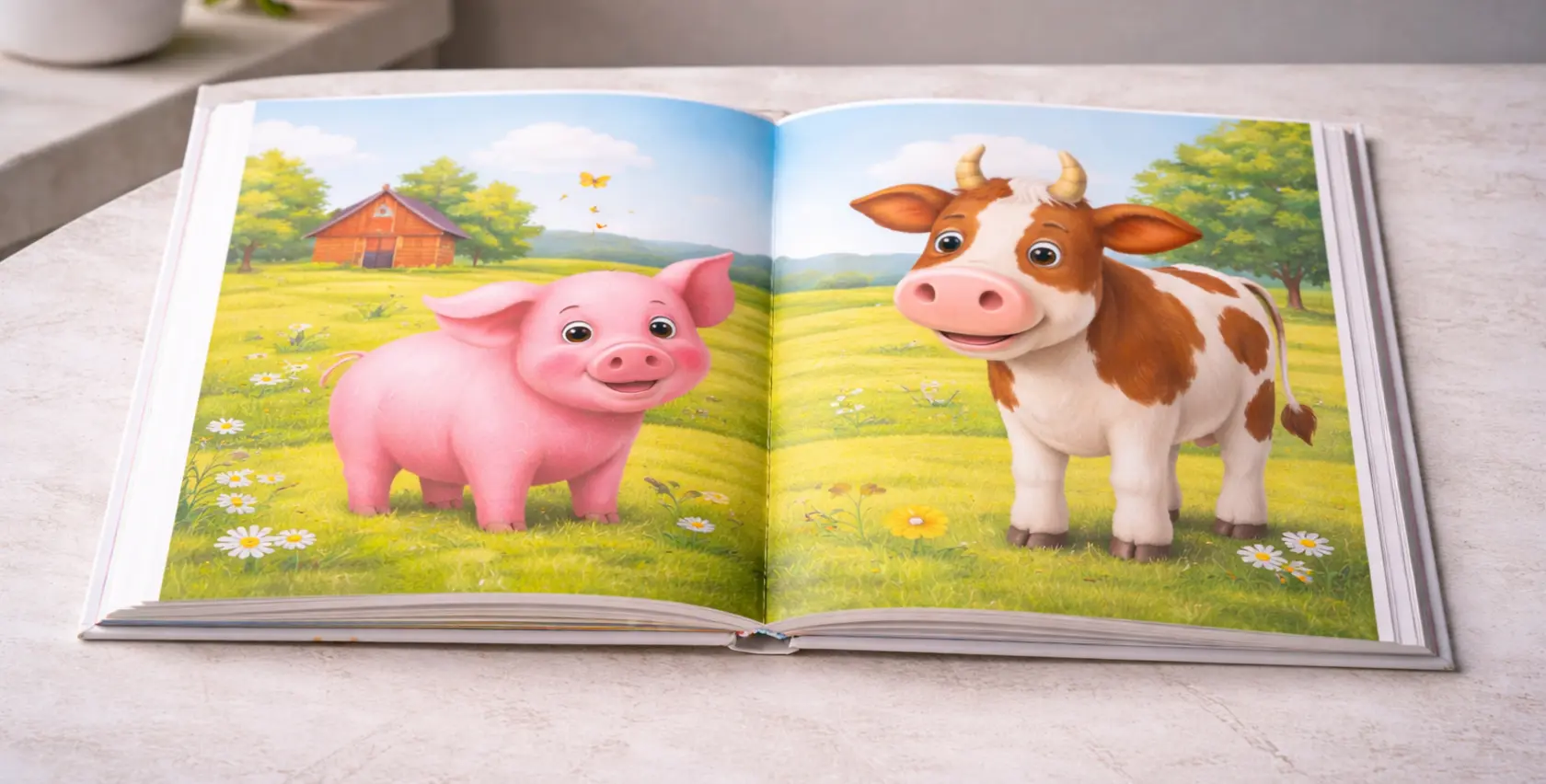
The separation between the meal, or the word for the meal, and the animal happens very early in our lives. Our first children’s books teach us the names of animals. We see drawings of smiling pigs and cows on green grass and learn the words pig and cow. And at the dinner table, we are served a beef burger and make no connection to the smiling cow in our book.
Usually, later in childhood or in our early teens, we become more aware of what is actually in our meals, and many teenagers decide to become vegetarian because of that new knowledge. But those who do not remain in their cognitive dissonance. They do not allow themselves to make that connection, because if they do, there will be consequences.
They would be forced, by their own brains, to reevaluate their current habits and reflect on everything they have done up to that point in their lives. And human beings tend to be empathetic. Therefore, only few people could happily carry on eating animal products once the cognitive dissonance is truly removed.
And what do vegans do? They persistently try to tear that cognitive dissonance apart. They talk about pigs and cows, not pork and beef. They tell you that you are eating animals that were killed solely for your taste buds. Of course, you know that deep down, but the cognitive dissonance does not let you feel it. That feeling can be overwhelming, and it would force you out of your habits.
Are vegans simply from the future?
What makes it so much worse is that the vegan who rubs this in your face suddenly seems to be on a different level. Something bad is happening, you are part of it and the vegan is not. This is extremely uncomfortable, so you go into defence mode. The easiest way out is to accuse vegans of taking the moral high ground. Vegans always think they are so much better than us, do they not?
We could take this to other topics, where maybe people who are not homophobic (anymore) are on a different level than people who (still) are. I will spare you that here, but it might be something worth thinking about.
In some areas of society, there is now a much clearer agreement on what is seen as wrong and what is not. Views that used to be expressed openly have become socially unacceptable, and for good reason.
Once that shift has happened, it often feels obvious in hindsight. Maybe it is worth asking why veganism still gets seen as arrogant or provocative, instead of something that might point in the right direction.
When vegans push too much
Very probably, many people who are not yet vegan already sense that a few decades from now they might wonder why the hell it took them so long. Killing an animal feels wrong, it always has, it always will. Of course, the vast majority of people who eat animals do not have to do the dirty work of killing them themselves. That makes it a lot easier.
And yet, many people who eat meat feel bad about it the very moment their cognitive dissonance shifts. What vegans need to understand is that they have no real power when it comes to shifting other people’s cognitive dissonance. Cognitive dissonance is a bit like discipline. It is something we can only work through ourselves. Other people can motivate us, but the final decision needs to come from within.
When someone pushes us too much, we easily switch into absolute resistance. This is somewhat related to what the clinical psychologist Dr. Doug Lisle calls the Ego Trap. When others have high expectations of us in a specific matter, we would rather not even try, because the fear of disappointing them feels worse than the nastiness of being sulky and not even starting.
If you want to explore this concept further in the context of evolutionary psychology, you can watch this short online lecture:
Most probably, “Oh, you could never go vegan in a million years” is a lot more likely to trigger a defiant response than “You should go vegan now, it’s the right thing to do and it’s easy, too.” In the end, humans love proving each other wrong, and maybe vegans would face a lot less hostility if they stopped pushing so hard.