Many people wonder if adding protein powder to their diet is a good idea. Vegans in particular are often asked if they need to supplement their diet with vegan protein powder in order to get enough of the macronutrient and to maintain or build muscle mass. There are two parallel questions in this regard: do vegans get enough protein, and is protein powder necessary for anyone at all? Let’s dive into the possible risks and benefits associated with protein powder.
What protein powder actually is
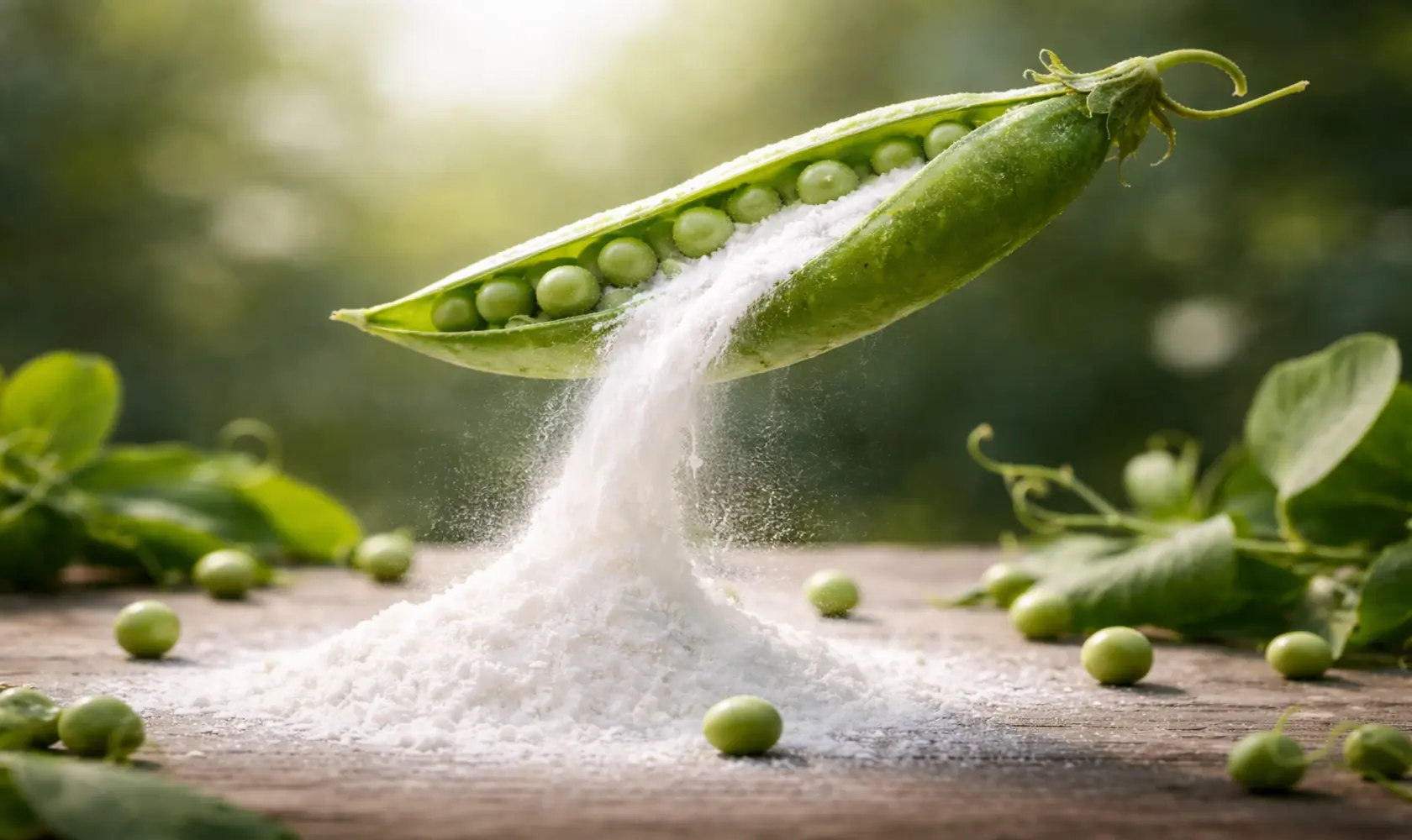
Protein powder is a highly processed dietary supplement made mainly of isolated protein from sources such as whey, soy or peas. The protein is separated from the original food source, while the other two macronutrients, fat and carbohydrates, as well as water and fibre, are largely removed. That entire process is not as simple as it sounds.
If we take peas as an example, they are first dried and ground into a fine flour. This flour is then mixed with water to form a kind of slurry. The mixture is made alkaline by adding a base, which causes the protein to dissolve into the liquid, while much of the starch and fibre remain undissolved.
These solid components are then separated from the liquid, leaving behind basically just water with dissolved protein. In the next step, the pH is lowered again by adding an acid. This causes the dissolved protein to lose its solubility and fall out of the liquid as small particles. The protein is then filtered out, washed and finally dried into a fine powder.
Do vegans get enough protein?
Vegans can easily get enough protein without relying on supplements like protein powder. In fact, anyone who eats enough calories and at least a somewhat varied diet does not have to worry about protein deficiency. Not only does unprocessed plant food contain plenty of protein and all the essential amino acids, but the human body itself is also incredibly efficient at recycling protein.
We have already covered how much protein humans actually need in a separate article. And the answer is a lot less than most people think. Vegans do not need extra protein any more than vegetarians or omnivores do. So is there anyone who actually needs protein powder in their diet.
The Science: Does Protein Powder Build Muscle?
The idea that protein powder is necessary is closely tied to the belief that muscle growth depends primarily on protein intake. But this is not how the process actually works. Muscle growth is triggered by resistance training, not by protein itself. Protein only provides the building blocks, and even those are already available in a normal diet, vegan or not.
And yet the protein supplement industry is a multibillion-dollar market, worth around 30 billion dollars globally, with thousands of brands and types of protein powder available. The main target group is people engaged in fitness, particularly those aiming to increase muscle mass.
So what does the scientific evidence actually say about the role of protein powder in muscle growth? A large meta analysis by Morton et al. (2018), published in the British Journal of Sports Medicine, which evaluated more than 40 controlled studies on resistance training, found that increasing protein intake can have a measurable effect on muscle mass.
However, this effect is rather limited. The same analysis shows that the benefit reaches a plateau at around 1.6 grams of protein per kilogram of body weight per day. Beyond this level, additional protein does not lead to further gains in muscle mass.
When looking at the actual size of the effect, the picture becomes more sobering. Meta analyses examining thousands of participants show that increasing protein intake leads to only relatively small additional gains in lean body mass over several months.
For example, a large analysis published in Nutrition Reviews found that increases in protein intake are associated with modest increases in lean body mass, on average around 0.39 kg over several months of increased daily protein intake. In other words, while protein can slightly improve the outcome, it does not fundamentally change the overall result of long term resistance training.
Considering the effort involved in producing protein powder and its final cost on the market, it seems fair to ask whether it is really worth it for a potential few hundred grams of additional lean body mass, especially when a similar result could likely be achieved simply by eating more legumes or soy products.
Possible Risks Associated with Protein Powder
Lastly, anyone considering supplementing their diet with protein powder should also look at its potential risks. While most products are generally safe and tested before they reach the market, and acute toxicity is usually not the main concern, there are other things worth considering before adding protein powder to one’s diet.
First of all, there are important contraindications for specific groups of people. People with chronic kidney disease, for example, are generally advised to avoid high protein intake and often to reduce their overall protein consumption, as excessive protein can put additional strain on the kidneys.
Secondly, people with digestive issues or food allergies should carefully check whether a product might cause bloating, stomach pain, diarrhoea or even allergic reactions. Protein powder is an isolated and highly processed substance that usually lacks fibre and many of the other components found in whole foods.
Many products also contain added sweeteners, flavourings or emulsifiers, which may cause digestive discomfort in some people. Possible allergens, on the other hand, include common ingredients such as soy, dairy or certain additives used in protein powders.
A third aspect to consider is contamination. Protein powder is often marketed as a clean and carefully controlled product, but independent testing has repeatedly found contaminants such as heavy metals in some powders. This is particularly relevant for plant based products, since plants can absorb substances like lead and cadmium from the soil.
Consumer Reports found in 2025 that more than two thirds of the protein powders and shakes they tested contained more lead in a single serving than their experts considered safe for a whole day. Separate testing by the Clean Label Project found that plant based protein powders contained, on average, three times more lead than whey based products.
Nutrient isolation: The real problem with protein powder
While protein powder does not pose any direct health threat to most people, there is a deeper, more philosophical aspect to the idea of isolating single nutrients from their natural source. This also helps explain why a vegan diet and a whole food plant based diet are not necessarily similar in their food choices.
A whole food plant based diet focuses on eating foods in a form that is as close as possible to the way they grow in nature. It is about seeing a fruit, vegetable, legume or grain as a complete food in its own right. It cannot simply be reduced to a combination of macronutrients and fibre. It is well known that plants contain thousands of additional compounds, many of which have not yet been fully identified, let alone isolated.
Furthermore, each nutrient is only one part of a much larger whole. Nutrients interact with each other and do not function in isolation. T. Colin Campbell describes this idea in detail in his book Whole. In our modern eating culture, we often fail to see the whole picture because we focus on small details and draw conclusions about single vitamins and minerals without understanding them in a broader context.
In a way, we have lost faith in nature, or for those who believe, in a higher power, that the soil, the trees, the shrubs and all the plants growing from the earth already provide us with the perfectly balanced nutritional packages we need.