
Changing dietary habits can be hard and sometimes it needs a little more than a personal goal and genuine motivation. The “worse” your current diet is, the harder it can be to turn things around. Highly processed foods are quite literally addictive and there is a neurochemical barrier that needs to be broken before we can truly find peace with healthy food. One way to get there can be a so-called potato cleanse.
A potato cleanse or potato reset means eating nothing but potatoes for a selected period of time. Depending on compliance and on how strictly “only potatoes” is defined, this can have several benefits, including a total reset of the taste buds, a break for the digestive system and the temporary elimination of unknown trigger foods that may be linked to intolerances or sensitivities.
The SOS-Trap – How salt, oil and sugar keep you in the loop
There are two ways any food can taste “good” to us. One of them is the natural way that most of us only know from the realm of fresh fruit. For most people, fruit is the only food category that is eaten unprocessed. That way, we can know whether we have a taste for apples, bananas or grapes or prefer sour fruits like pineapples or oranges.
Depending on culture, the same can apply to some vegetables, but far less often, because even when we talk about raw vegetables, many people will casually sprinkle salt on them or dip them in some creamy sauce.
Most of the food most people eat is either processed or at least enhanced with added salt, oil and sugar. In the plant based world, this “trio from hell” is often abbreviated as SOS. Hence, you can find vegan SOS-free recipes and the like.
While all three are, in a way, natural products, they are far from natural in the way we consume them today. Each of them, through different processes, is isolated from its original source and therefore highly concentrated and without “context” for the body.
Sugar is typically extracted from sugar cane or sugar beets by crushing the plant, separating the juice and refining it until pure sugar crystals remain. Salt is obtained either by evaporating seawater or by mining rock salt, then purified and ground.
Oil is produced by pressing or extracting fat from plants such as olives, seeds or nuts, which concentrates the calories significantly. For example, it takes roughly 15 to 20 olives to produce just one tablespoon of olive oil.
All plants contain salt, oil and sugar to a certain degree, but not as isolated nutrients. Rather, they occur as part of a more natural package, in the form of sodium, fatty acids and carbohydrates such as glucose, fructose or sucrose.
Salt, oil and sugar as we know, buy, use and consume them are not natural in that sense. In fact, when they hit our system, our brain reacts to them in a similar way it reacts to drugs, just a lot milder of course.
All three of them enhance the taste and, apart from salt, also the calorie content of the food and therefore signal to the brain that an amazing food source has been found that can be excellent for our survival.
Unfortunately, our brains are still operating on very old survival programming. Throughout most of human history, food was never abundant in the way it is today in many parts of the world. Scarcity, famine and physical effort to obtain food were the rule, not the exception, and our brains are still wired accordingly.
Our body therefore responds strongly to calorie-dense food, especially when those calories come from fat. In combination with salt or sugar, or both, this can feel like the absolute jackpot. For many people, this creates the very real struggle of not being able to stop eating and can sometimes lead to full-on binge eating behaviour.
Why going cold turkey works best
While salt, oil and sugar, or highly processed high-calorie food in general, activate similar reward pathways in the brain as synthetic drugs, the related “addiction” is not chemically dangerous in the same way and does not come with comparable withdrawal symptoms.
For most people, nothing serious can happen if they just stop consuming “addictive food” from one day to the next. Mild withdrawal symptoms might include cravings, irritability, headaches, low energy, difficulty concentrating or feeling unsatisfied after meals.
Usually, these symptoms, if they occur, only last for a day or two at most. The only aspect that might last longer is the feeling of not being satisfied after a meal, but this is usually because, when switching to a healthy unprocessed diet, you might not realise that you are actually not eating enough in terms of calories.
If you manage to reach the recommended calorie intake for your age, gender, height, weight and potential weight loss goals by eating only unprocessed foods, a new type of satisfaction will soon settle in. For most people who are really set on “cleaning up” their diet, going cold turkey is the most sensible solution.
The “suffering” will be brief, just as it is better to rip off a plaster from a hairy body part than to peel it off slowly. And the reward will most likely feel amazing. So where does the potato cleanse come into play?
Why potatoes reset your taste buds
Potatoes are a truly remarkable food. They have been cultivated for thousands of years and were first domesticated in the Andes of South America, in regions that are now part of Peru and Bolivia. From there, they made their way to Europe in the 16th century with Spanish explorers and slowly spread across the continent before eventually becoming a staple food.
They were later introduced to Asia, where they became widely used in countries like India and China, and were also carried to North America by European settlers, where they became just as essential. Potatoes worked so well for so many civilisations because they are relatively easy to grow and store well over long periods of time.
They are also easy to transport and provide a solid source of carbohydrates, mostly in the form of starch, along with important micronutrients such as potassium, vitamin C and vitamin B6, which makes them a remarkably reliable staple food.
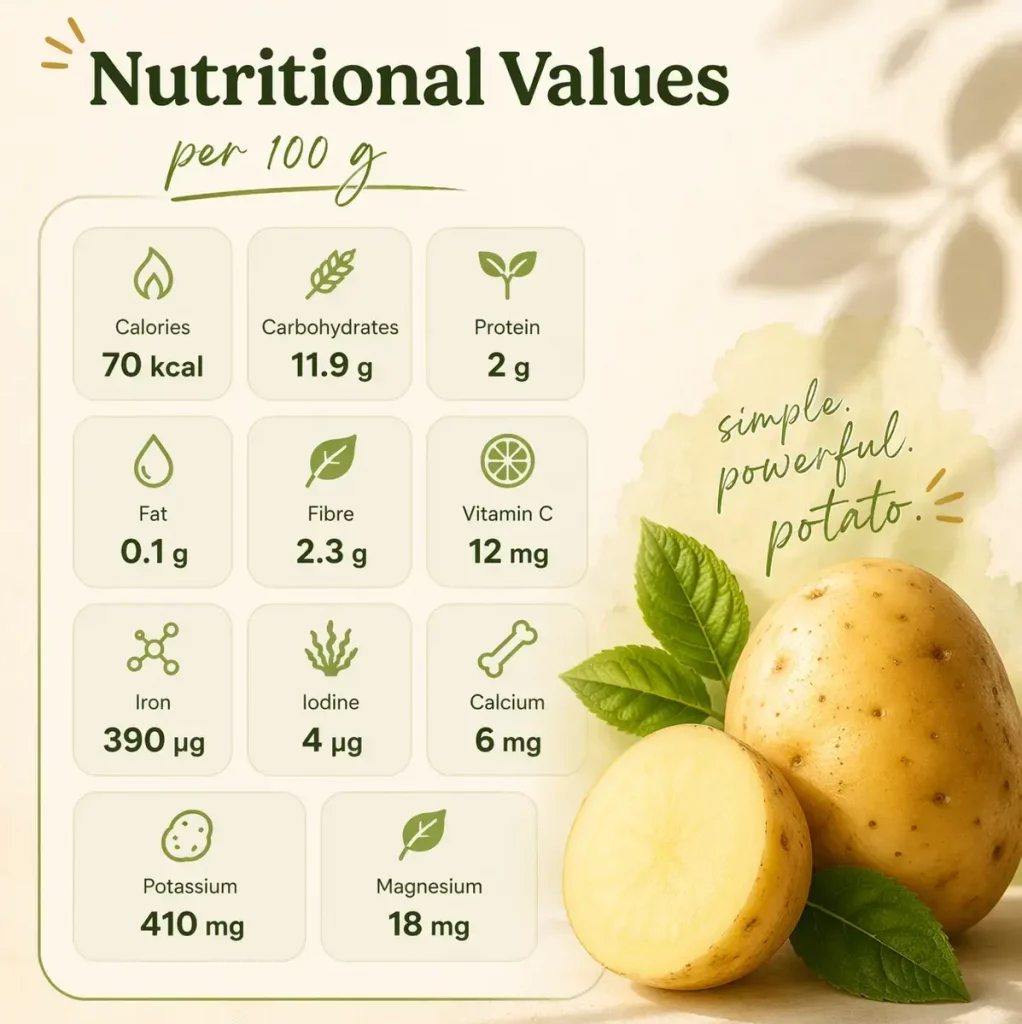
Compared to other vegetables, their taste is not “strong” as such. Many people might even accuse them of tasting bland if they are simply boiled without adding any salt, oil or sauce. For a reset of your taste buds, though, the potato is a magical package. It provides enough calories for the day as long as you eat enough of them, without the risk of actually overeating.
They feel filling in a way other vegetables do not and they are “bland” enough not to overstimulate you. If you eat nothing but potatoes for a week or more, anything else afterwards will feel like proper taste fireworks, even a fresh tomato or some steamed broccoli.
Sticking with potatoes only has a similar effect to fasting from that very viewpoint. To be fair, water fasting is more effective and also has various other benefits, but it should not be attempted unsupervised unless you are already highly experienced with it. For a potato cleanse, on the other hand, usually no medical assistance is needed.
However, if you are on any type of medication or suffer from chronic or acute diseases, please consult your doctor first. You can also get in touch with plant-based physicians for guidance if your own doctor is not particularly interested in nutritional approaches.
Potatoes only to eliminate trigger foods
A brief potato-only diet is also highly recommended for people with digestive issues and intolerances where the exact culprit has not yet been identified. By ditching everything but plain potatoes from your diet, your symptoms should vanish quickly, unless, of course, the potato itself turns out to be the trigger.
After a few days, you can then slowly reintroduce food items and observe closely whether your previous problem returns. Usually, you start with foods that are unlikely to be the cause of your problem, simply to bring a bit more variety back into your diet. These are typically plain foods such as steamed vegetables or rice.
Give it 24 to 72 hours before adding anything else, because with some trigger foods the reaction is not immediate. If all goes well with rice and vegetables, you can take the next step towards more likely triggers such as soy, nuts, gluten or dairy, if those were part of your diet.
This way, you can gradually identify which foods your body tolerates well and which ones it does not. Over time, this creates a clearer picture of your individual sensitivities and helps you build a diet that actually works for you.