Outside of Asia, tofu is one of the most misunderstood foods of all. Most people only come into contact with it in the context of vegetarian or vegan meals. As a result, many assume that tofu is some kind of substitute product for vegetarians and vegans. Some think it is supposed to imitate cheese, while others associate it more with meat. So what is tofu really?
First things first – Tofu is Tofu
Tofu has existed for more than 2,000 years. It originates in China, where it is still called doufu today. Dou fu is usually translated as bean curd or curdled bean, which already says a lot about what the product is. Tofu is made from soybeans. The beans are first soaked in water, then ground and boiled. The resulting soy milk is then separated from the pulp, curdled with a coagulant and then pressed into blocks.
The reason we call it tofu and not doufu is simply that tofu is the Japanese word for the product. Although tofu originally comes from China, the word entered Western languages through Japan rather than directly through China. The food itself, however, is extremely widespread across East and Southeast Asia and a staple in countries such as Korea, Vietnam and Thailand.
What does tofu taste like?
The fact that people see tofu as a possible substitute for both cheese and meat already shows how versatile it actually is. Tofu can take on all sorts of shapes and forms, and in terms of taste it can go in almost any direction. It is often assumed that this is simply because tofu is bland and has no taste of its own.
While it is true that tofu does not have a strong taste, the idea that it is bland is more a reflection of our constantly overstimulated taste buds. Pasta, rice or white bread also do not have a strong taste unless we enhance them, most of all with salt and then with spices on a second level.
Once we are used to salty and spicy food, everything without it appears bland. If you want to know what tofu really tastes like, you either need to eat it in the context of maximum clean eating, or eat it plain when you are really, really hungry. And by that I mean a state most of us rarely reach. Real hunger knows no fussiness.
If you want to know whether you are truly hungry, think about eating a pound of steamed broccoli or green beans with no oil and no salt. If the “hunger” goes away and your thoughts drift towards your favourite junk food, then it was not hunger. If, on the other hand, your stomach shouts “hell yes”, then you are hungry, and that is a great opportunity to eat plain tofu and find out what it really tastes like.
Superfood tofu – The nutritional profile of tofu
Tofu is sometimes called a superfood because of its surprisingly strong nutritional profile. Superfood, however, is nothing but a marketing term and has no scientific definition. Even so, tofu does have an interesting macronutrient ratio and contains many important micronutrients, which can make it a valuable food for many people.
The three macronutrients – carbohydrates, fat and protein – are all present in tofu. Protein by far makes up the largest share of the three, followed by fat and finally a small amount of carbohydrates. Measured by weight, even firm tofu consists mainly of water, which makes up about 75 % of its total weight.
Of the total 100 g, around 13 g are protein, 7 g fat and 2 g carbohydrates, with the rest made up of small amounts of fibre and various minerals. If we take out water, fibre and micronutrients and look only at the macronutrient ratio, we are left with a product that is 59 % protein, 32 % fat and 9 % carbohydrates.
Apart from the macronutrients, tofu also contains several important micronutrients, especially calcium. The exact content varies significantly, as it largely depends on which coagulant is used during production. Per 100 g, tofu contains the following micronutrients:
- Calcium: ~200–350 mg
- Iron: ~1.5–3 mg
- Magnesium: ~30–60 mg
- Phosphorus: ~100–200 mg
- Potassium: ~120–200 mg
Tofu and the estrogen myth
There is a very persistent misunderstanding, or rather myth, surrounding tofu and soy products in general, and it has to do with phytoestrogens. Some people, especially men, stay away from soy products because they believe that consuming them might feminise their bodies. They associate phytoestrogen with the female sex hormone estrogen and therefore worry about consuming such a “hormone”.
In reality, phytoestrogen is not a hormone. It is in fact a secondary plant compound, in the case of soy, mainly an isoflavone, that serves protective and signalling functions within the plant. It was named phytoestrogen because its molecular structure is similar to estrogen, not because it actually is estrogen. This similarity is exactly where much of the confusion begins.
When we consume such phytoestrogens, they can interact with some of the same receptors as estrogen, but they do not act like human estrogen and do not trigger the same biological effects. If someone is seriously worried about hormonal substances in food, then products containing actual estrogen would logically be the more relevant category.
Cow’s milk does contain estrogens as part of its natural hormone profile, which originate from the animal itself and have been discussed in the scientific literature, especially in the context of hormone dependent processes. While the clinical relevance in humans is still debated, this puts the common concern about tofu into perspective.
Tofu as a substitute in vegan cooking
Of course, tofu is vegan, but it is not a vegan product as such. As explained initially, tofu is just tofu and eaten by millions of people who are not necessarily vegan or even vegetarian. Tofu does not really replace anything, it is just its own thing that can complement anyone’s diet. However, it is true that outside of Asia it is often used as part of vegan substitutes.
While tofu does take a route similar to cheese during production, as it is curdled from a liquid, it is not generally used as a cheese substitute in vegan cuisine. When cut into cubes, however, it can sometimes imitate mozzarella in otherwise raw dishes and salads.
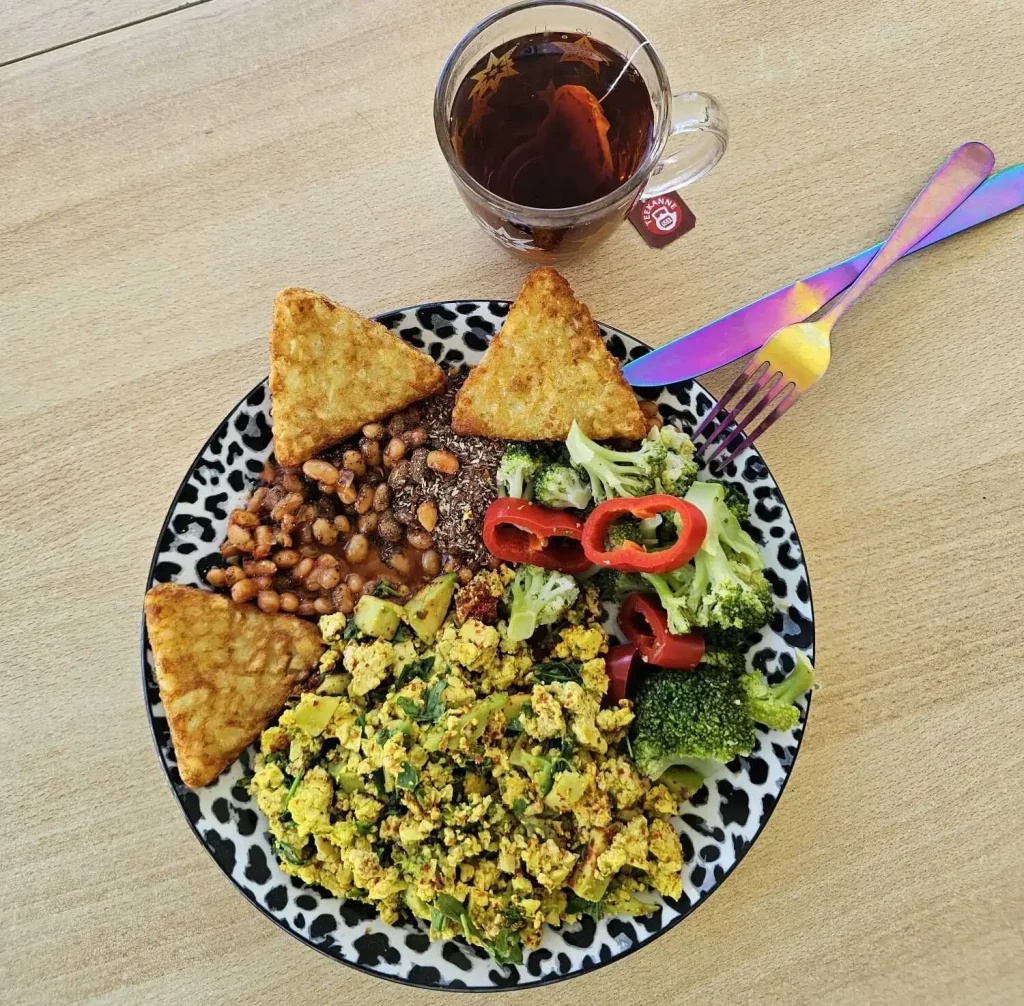
And when scrambled, it can be turned into something similar to scrambled egg, especially when spiced up with kala namak, also known as black salt, which adds an actual egg-like flavour because of its high sulfur content.
For the most part, tofu is prepared much like certain types of meat. Tofu can easily be marinated with all sorts of sauces, herbs and spices and then pan-fried, oven-baked, prepared in an air fryer or grilled on any type of grill. Only rarely are vegan substitute products such as “vegan nuggets” or “vegan escalope” simply tofu inside a coating.
Since tofu does not work particularly well as a realistic imitation, most of these products are instead made from isolated plant protein, for example from soy, wheat, beans or peas. In another area of cooking, on the other hand, tofu works surprisingly well, and that is in desserts, for example in cakes, puddings or mousses.
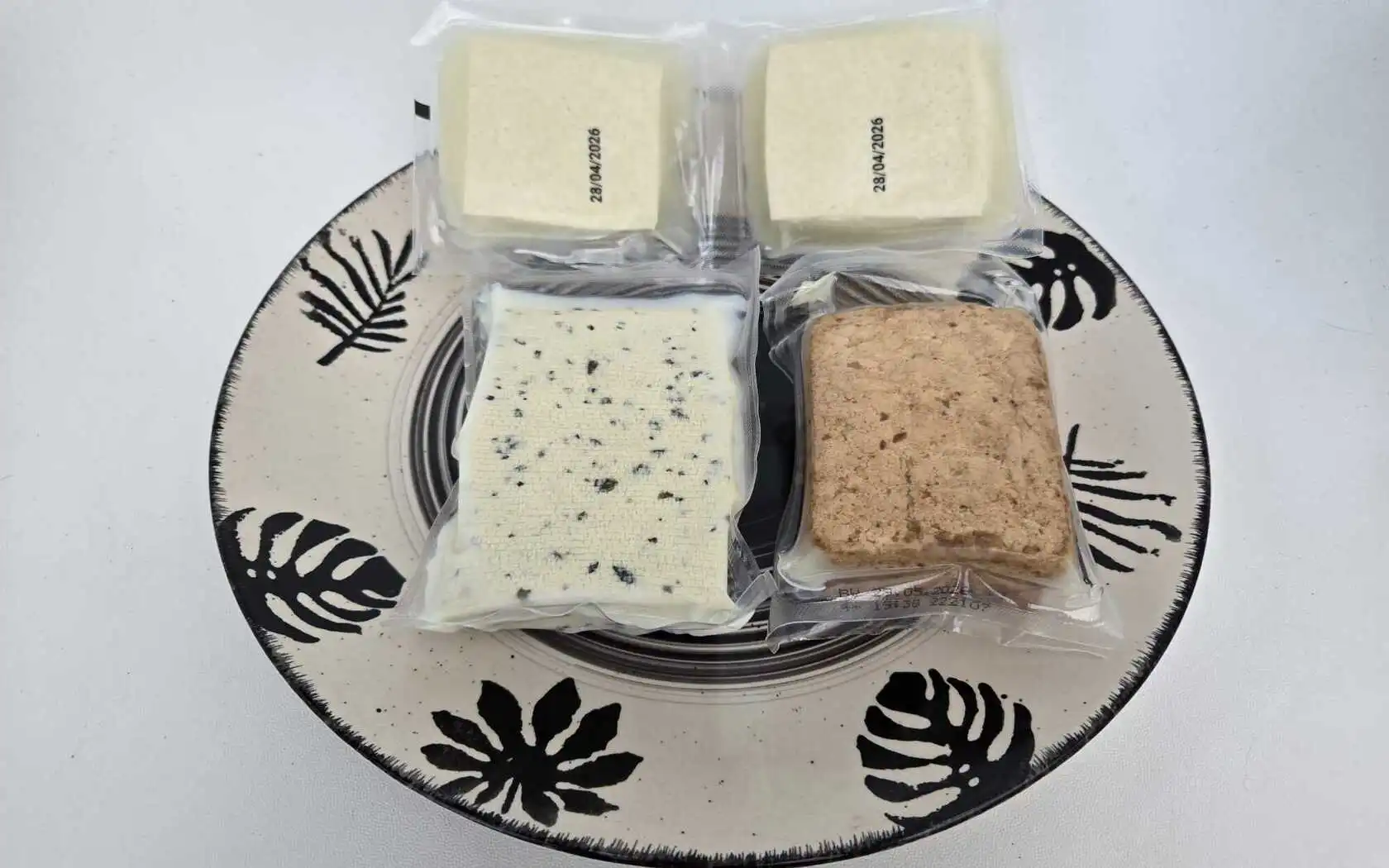
For these dishes, a very specific type of tofu is used, the so-called silken tofu, which is a very soft, almost jelly-like tofu with a high water content. Silken tofu is made from the same base as firm tofu, but instead of being pressed to remove water, it is left as it is, which gives it its soft and smooth texture.
Tofu is therefore incredibly versatile and useful in the kitchen. It can also be bought in many different varieties, which are often smoked or already marinated. It is worth trying a few different ones, and true tofu connoisseurs will know that every brand tastes a little different from the others.